
Episode 153
August 7. 2020
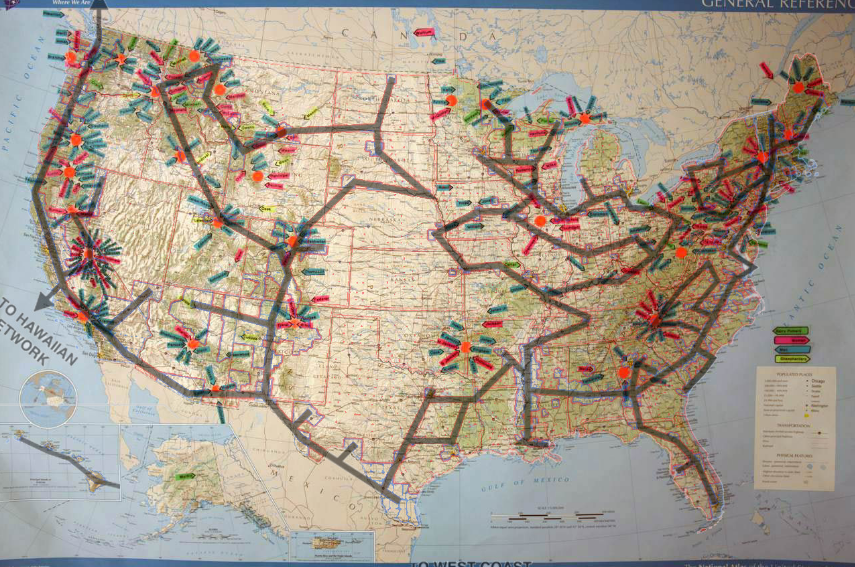
In the first part of a brand new series, I look into a mystery that listeners have been asking me to cover since the earliest days of the show – a strange pattern of missing persons and mysterious deaths, in the national parks of North America.
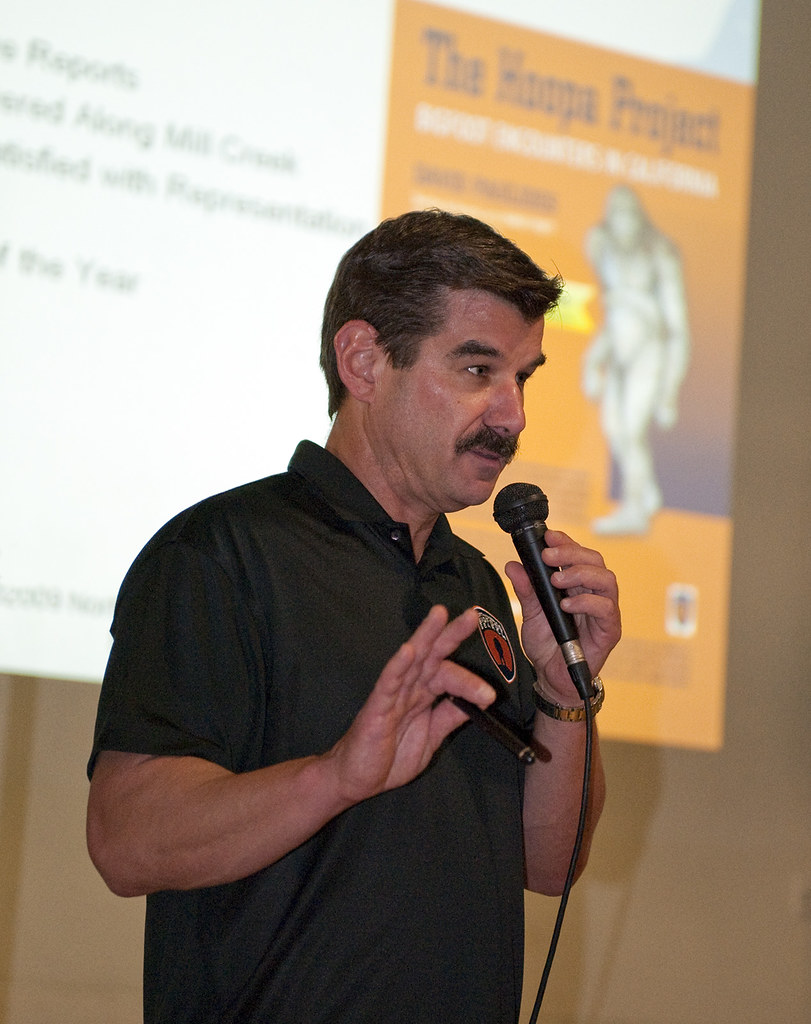
Many listeners will be familiar with this topic, cemented into the American subconscious by true crime researcher and retired detective, David Paulides. In this first episode, I consider some key cases, take a look at Paulides’ work and ask whether there’s a pattern to be found. On discovering far too many strange circumstances, I start to wonder… Is there a coverup in the National Parks?
As usual, you can download the episode or stream it below. An extended cut is available on Patreon, and the episode is available for playback on Spotify.
CASE NOTES
A few episodes ago, with encouragement from some of our members, I started running case notes alongside each episode. These include additional information, links to relevant articles, downloadable documents, my own thoughts on the research process and a whole lot more. Scroll down to dive into the case notes for Episode 153.
Dig into my source material, starting with David Paulides…
Paulides attracts many skeptics, but these detractors rarely mention his unnavigable website: it’s harder to find your way around than any national park. Suffice it to say that Dave’s passions do not extend to graphic design. Instead, for a much more polished, albeit introductory look at his research, you could check out his films. Paulides has produced two professionally made documentaries; and in line with the reviews, I actually found these to be both entertaining and informative. Each features cases, interviews and a host of information about the topic in general. They are, Missing 411 (2016) and The Hunted (2019). Both are available on Amazon Prime Video.
But given the time limitations of documentary film, Paulides’ books proved a far more useful resource for this episode. Comparing data from the books with newspaper articles and archival records, I used them as a platform from which to launch my own investigation this week. I certainly recommend these to interested listeners, but be warned: they’re exceptionally hard to acquire in the UK. From what I can ascertain, Paulides would rather you bought them from his own website. While this is an option if you live in the Americas, they don’t ship overseas and European resellers have them at frankly extortionate prices. Luckily for me, I was sent the first four volumes a little while back, by a listener who wanted me to cover this topic. Whoever you are, mysterious person: you’re the one who finally gave me the facility to approach this material with confidence!
All of that said, you could always listen to Paulides on the radio. Coast to Coast AM have a series of fantastic interviews with him, conducted by investigative journalist, George Knapp. They’re behind a paywall, but as an alternative, I heartily recommend his collaborations with the podcast, Where Did The Road Go. As well as a way to hear some cases in detail, they should give you an impression of Paulides as a person. These make for a spooky evening or ten.
For the bigger picture, you could check out the dedicated subreddit for this content over at r/m411. Over the last few weeks, I’ve used this sub to ask questions, and to get a feel for the community beyond Paulides.
Likewise, some peripheral material might include older but similar studies on the topic of strange missing persons cases. I suggest you start with The Great Lakes Triangle, by Jay Gourley and then, perhaps, the last chapter from Our Haunted Planet; a book by one of my personal heroes: the late, great and eternally open minded journalist, John Keel.
Address a little skepticism…
One particular article appears to have done the rounds in 2017. There are others, but this is the one that gets the most attention; probably because it’s referenced on the Wikipedia page for David Paulides and Missing 411. Somewhat comically though, that Wiki contains multiple statements which are at best unverified, and at worst, not true. At any rate, the article in question is authored by data scientist, Kyle Polich. It can be found in the Skeptical Inquirer (Vol. 41, Issue 4). I want to mention it here because it makes some good points, but ultimately exemplifies one of the issues I take with professional skeptics. There’s absolutely nothing wrong with testing the veracity of claims made in the public domain. In fact, I celebrate it. But in my own life, I’ve run into too many professional skeptics who act like pompous zealots, preaching methodologies that they struggle to practice themselves. For instance, Polich makes some interesting claims about Paulides drawing of patterns. And I agree with him there, insofar as he criticizes the lack of professionalism in the construction of the models used by Paulides more recently. But he also claims that none of these cases are at all strange in themselves; which is unprofessional of him and frankly preposterous. For instance, that claim collapses when, a) search and rescue professionals are on record, noting that many such cases are suspicious, and b) many of these cases remain unexplained; something far from usual, compared to the vast majority of reported disappearances. Instead, some of the skeptical bile seems to respond to Paulides’ celebrity status in particular fringe communities. For instance, many more mainstream authors (note: with influential publishers) have made similar observations to Paulides in the past, and without coming under equivalent scrutiny. Indeed, Jon Billman has not been decried as a kook, despite expressing similar opinions in The Cold Vanish: Seeking the Missing in North America’s Wildlands. And that’s an issue in its own sense: as regular listeners will recall, I’m rather tired of assaults on fringe communities, and especially those made by self styled progressive institutions. Looking at you, editors of the Skeptical Inquirer.
To be fair to Polich, he seems qualified to comment on Paulides’ collection and modelling of data. However, he is not really qualified to comment on specific cases. After all, he alleges to be a data scientist, not a wilderness expert or law enforcement professional. Yet he does. It’s that sort of flat and somewhat hypocritical approach, taken by so many skeptics, that turns me off to their work. There’s nothing wrong with questioning things; indeed, it’s the whole point of this show! But I think it’s disingenuous to burry evidence so as to enhance your own position, whether you’re Paulides, Polich or anybody else. Otherwise, the whole thing becomes an exercise in blame, overshadowing sensible questions from both camps.
Overall, my take is that Paulides makes multiple claims, and that these must be tested separately. First, he claims that many different cases are strange for a variety of distinct reasons. Secondly though, he notes similarities and claims that a pattern exists. As far as I can tell, some disappearances may be less strange than Paulides makes out; but this wasn’t my conclusion regarding any of the cases I looked into when writing and recording this episode. And as to the pattern, Paulides states that it might exist, insofar as his readings of the data suggest, but he doesn’t claim that it does. It’s a narrow line, but he’s not asking you to believe him: he’s asking you to do your own research. Oh, how some people hate that phrase! Of course, we should trust the experts… But only in their areas of expertise. So here’s to you, Kyle.
Next in this series: Episode 154.
 THE STRANGENESS